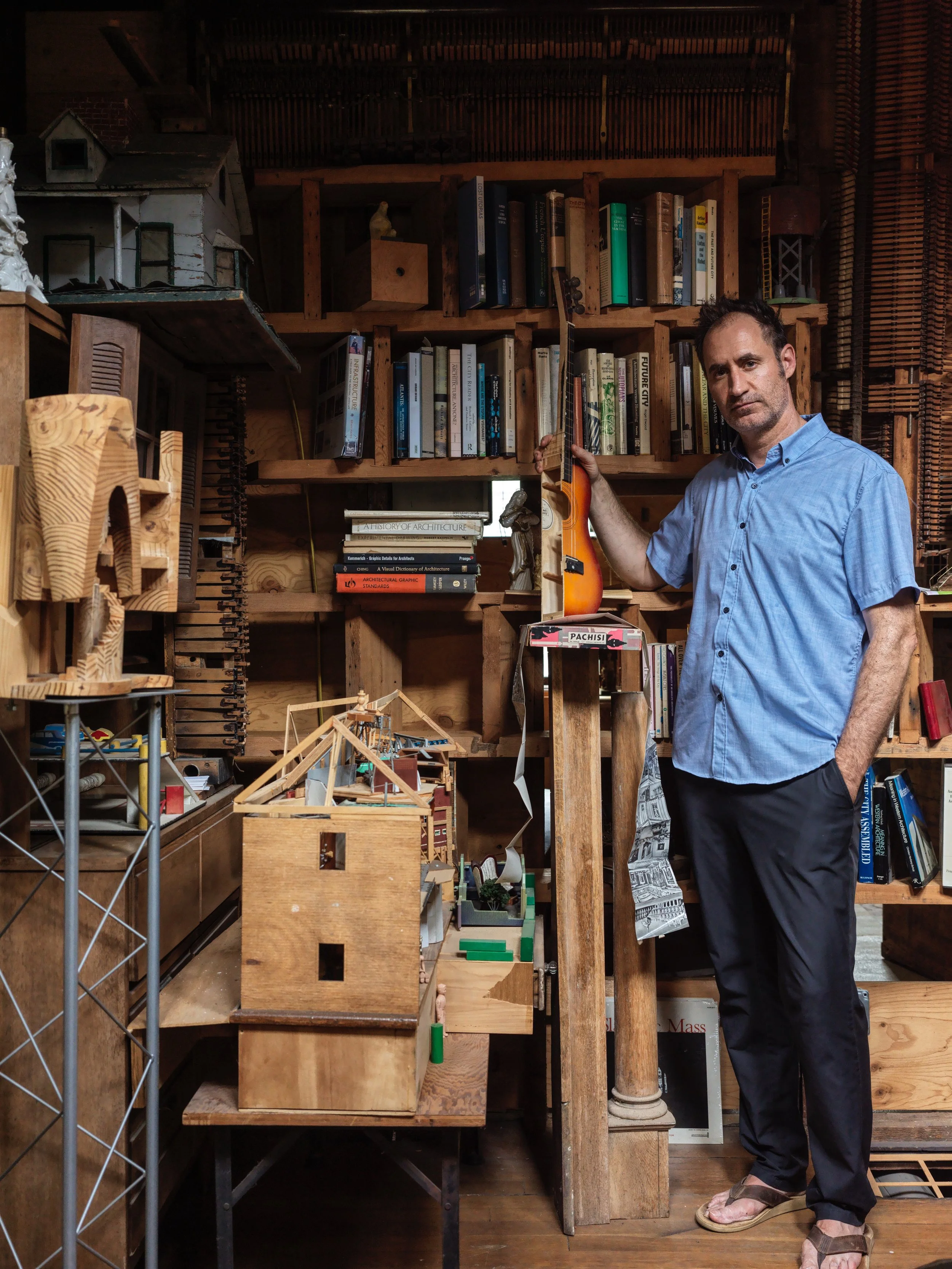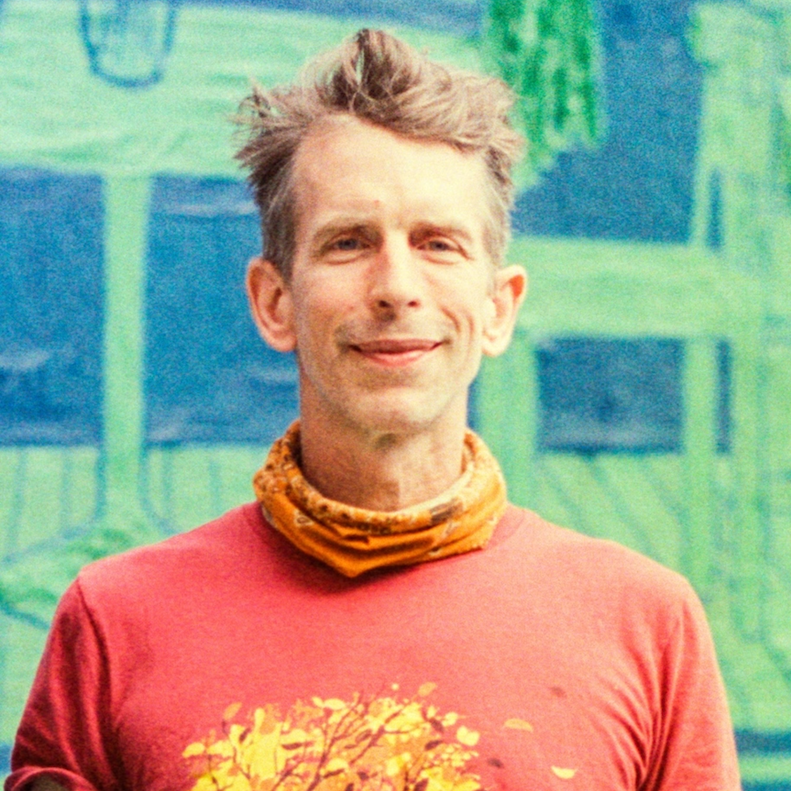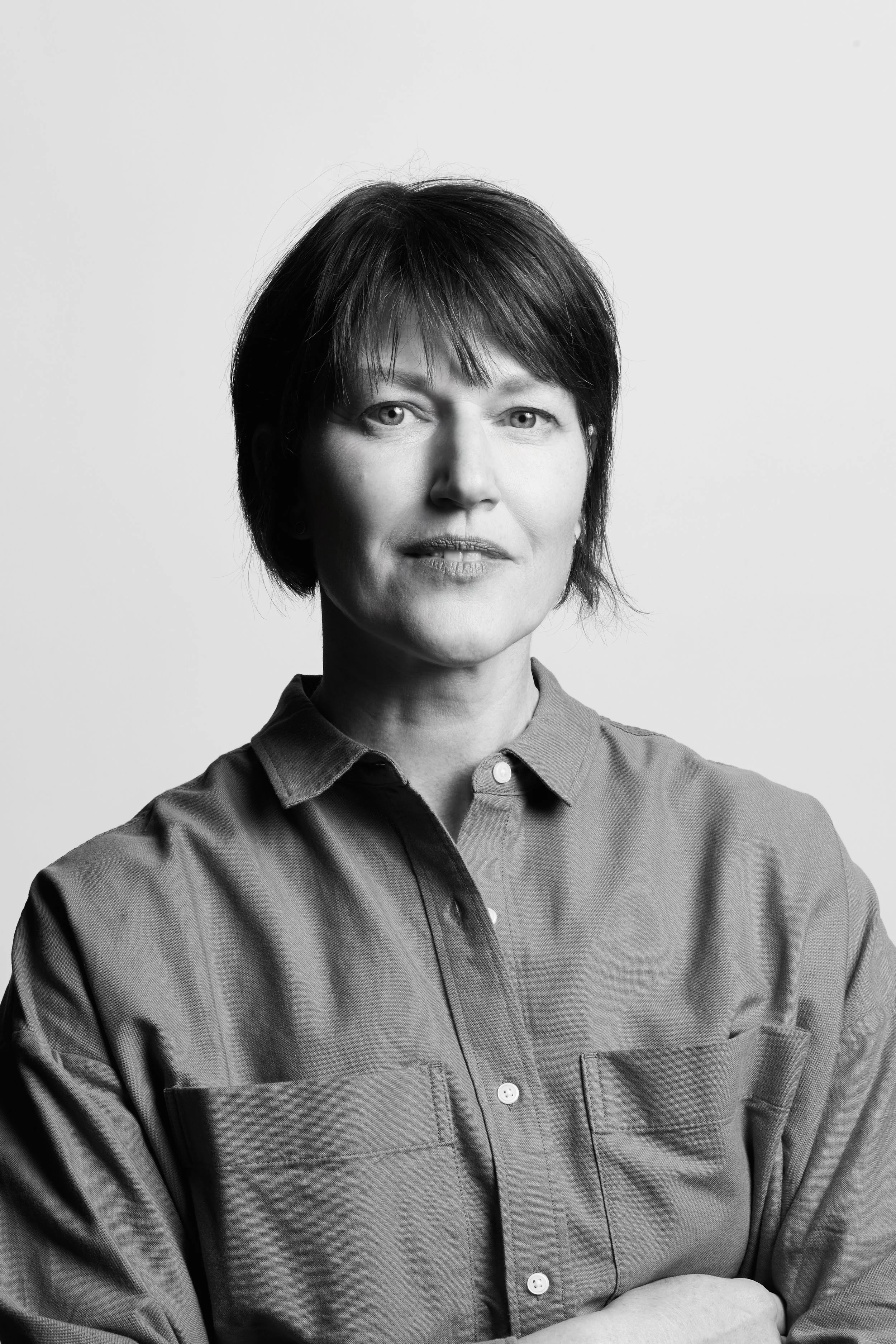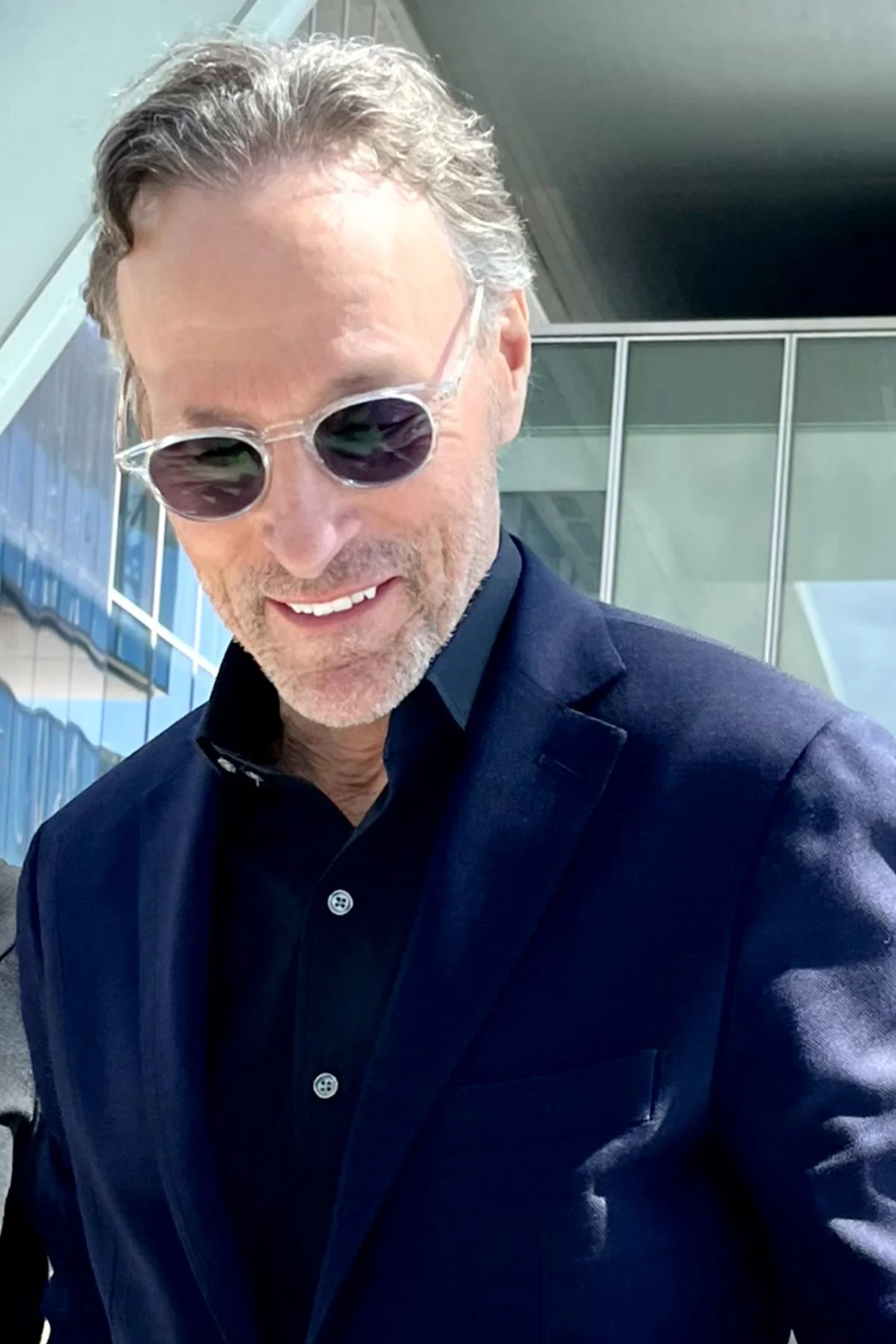
Ep. 56: Jerry Helling
President and Creative Director of Bernhardt Design, Jerry Helling, grew up on a ranch in a remote town with 11 people in his graduating class before venturing to USC and a potential career in Hollywood. A personal epiphany combined with serendipity rerouted him into the furniture business, resulting in a long and distinguished career as a keen mentor of talent, a champion of originality, a risk-taking, needle-moving industry voice, and a major benefactor of international design. Plus, he’s really nice!
Keep tabs on Jerry by following Bernhardt Design on Instagram and visit their website to see more of Jerry's collaborative designs.
Jerry Helling: It was about the relationship. And letting it evolve. Ross Lovegrove, probably one of the most well-known pieces we’ve ever done is called the Go Chair and it was the first chair ever made out of Magnesium and it started as a simple design, not even a design brief about, “Oh, let’s do an inexpensive aluminum stack chair” and we stuck with the process that many, many hundreds of thousands of Dollars later allowed us to introduce the first chair ever made of magnesium because we didn’t want to give up on the feel of the piece because it couldn’t be made in aluminum.
Amy Devers: Hi everyone, I’m Amy.
Jaime Derringer: I’m Jaime. And this is Clever. And today we're talking to Jerry Helling. Jerry Helling is president and creative director of Bernhardt Design and has been with the company for over 27 years. During that time, he's jump-started the careers of many well-known international designers and moved the needle forward in how American contemporary design is regarded globally. He's also the first president of The Original Americas, a trade association dedicated to celebrating the power of original design while exposing the harm done by fakes and knock-offs. He is widely respected in the furniture world for being a champion of the arts, a mentor to emerging designers, and an advocate for authenticity and originality. He's also got a keen eye, a sharp mind, and a kind heart. Let's talk to Jerry.
JH: Jerry Helling from Bernhardt Design located in Lenoir North Carolina. I’m president and creative director of our company. I do it because I love design and furniture.
AD: [Laughs]. Well, Jaime and I love design and furniture too [laughs]. That’s one of the reasons we’re doing this [laughs] podcast. We always like to go back to the very beginning we wanna know what your roots were like where you grew up. Can you paint the picture of your childhood for us?
JH: [Laughs]. I will uh, [laughs] – I’ll do my very best. It was an interesting childhood. I grew up in a small town in Eastern Colorado. The name of the town was Idalia Colorado. I grew up on a ranch and I had 11 people in my graduating class.
AD: What?
JH: So, when I went to university I would say, “I’m from a really small, a really small high school” and they would say, “How many people did you have in your class?” and I would go, “Well, 11” and they would go, “Oh, 1100’s really pretty big, I only had 800” [laughs]. So, it w-; a-; and I went to school and I started school at USC in Los Angeles. So, going from a small ranch in Eastern Colorado to the USC was let’s say it was quite a change [laughs].
AD: I can imagine. What – as a child, what kinds of things fascinated you and did you have like a lot of wide open spaces and animals and farm equipment or like w-; what was that like?
JH: Yes, all of the [0.05.00] – above it was a large ranch and I rode horses and worked because that’s what you did when you lived on a ranch and I was always m-; most interested in the entertainment industry, in films and in music and in the summers that we’d go to New York, I always had a strong interest outside of rural America, let’s put it that way.
AD: So, was the ranch a family business?
JH: It was.
AD: Oh.
JH: It was a ranch that my grandfather started at the turn of the 20th Century in the early 1900s and it had been in the business and that’s what my father did [laughs] none of his children chose to do that [laughs]. My sis-; my sister lives in Denver, my brother lives in Minneapolis but it had been a family business and it’s still a family business on – through my cousins now.
AD: I’m fascinated by this because it’s the opposite of how I grew up. What kind of ranch was it, was it a cattle ranch or a – wh-; what was the -
JH: Ooh, it was, it was both a cattle ranch and a farm.
AD: Ah.
JH: So, it was a large cattle ranch and it was a farm with irrigation and that grew crops and I was never at all interested in the farming side of it I did like the ranch portion of it, riding horses and we would have roundups of cattle kind of like a John Wayne [laughs] film sort of thing.
AD: That’s what I’m picturing [laughs].
JH: exactly [laughs] and when I was in college my fraternity brothers would come down for roundup and that sorta thing, everyone riding horses and I think everyone it was like going to a dude ranch or something [laughs]. Now when you’ve lived there and work there all the time it’s a very difficult life.
AD: H’m.
JH: You have to work very hard.
AD: I believe it. A lot – all those animals are quite a lot of upkeep, not to mention the land and um, so -
JH: You weren’t expecting [laughs] this one, were you?
AD: I, I love it. I didn’t know you were such a cowboy [laughs].
JH: I se-; I send, I send a picture to people, [laughs] I’ve got it, I’ve got one picture of me riding a horse when I was younger because everyone I tell this story to are like, “Oh, yeah, really?” [laughs], “I think, I think you’re embellishing this story” and it’s like, “No, this is real” [laughs].
AD: Okay, we’re gonna need that photo, have it on standby for us.
JD: Oh yeah [laughs].
JH: [Laughs]. Right.
AD: [Laughs]. You said you were always intrigued by the entertainment industry and movies and music. What kinds of movies and music were you drawn to and did the westerns kinda seem fake to you because you were really living it?
JH: The, the western film?
AD: Yeah, western, yeah, like cowboy movies.
JH: You know, I didn’t really ever draw that correlation.The life I was living was more like – I don’t know if you’ve ever heard of a film done by Peter Bogdanovich, called, “The Last Picture Show”?
AD: Uh, h’m.
JD: Um.
JH: From the early seventies that was shot in black and white and it was about a small ranch town and the isolation of it. So, th-; that sort of film seemed very realistic. Westerns were probably several generations removed.
AD: Uh, h’m.
JD: H’m.
JH: So it just seemed like entertainment.
JD: But I, I’m curious because you were exposed to movies, television, you went to New York in the summer. So, you knew – you had exposure to the outside world and other things that were happening around the world or around the country. So, it sounds like your parents were pretty like open to you, being exposed to society and culture and music and art and those kinds of things, is that kind of -
JH: Oh.
AD: Where your creativity came from?
JH: I, I think very, very much so. I think my mother probably supported that [laughs]. Because I would have other c-; crazy ideas [laughs]. For them it was somewhat probably surprising that their eldest son would choose to go to USC to college. There were not many people from Eastern Colorado who would make that kind of decision, but they had supported that my entire life and they would let me go and spend time in New York in the summer and I had an uncle who lived there and they would let me go to Los Angeles and spend time. So, they, they were very supportive about that.
AD: H’m.
JH: They knew I wasn’t particularly interested in ranching or farming.
AD: I’m interested in the teenage years, like because for me that’s like when I really started to bristle against the boundaries of my small town, when I really started to feel hemmed in by it and I started to really, you know look around and, and start to make my next move. Do you have a story or anything from your teenage years or your adolescence that kinda explains that transition from being a teenager to an adult? What kind of informed your adult self?
JH: You’ve – whoa, that’s um, [laughs] that are a real question [laughs].
AD: Yeah, Jerry, so just [laughs].
JH: Yes.
AD: We’re gonna need to open your brain up and really see the insides [laughs].
JH: Oh gee [laughs]. I, I wish I could do that. You know I was always very matter-of-fact. When I was 15 years old it was, “Okay, I’m gonna go to film school in LA” and I didn’t, there was no awakening. I just always knew I was going to do something else and it didn’t particularly bother me –
AD: Uh, h’m.
JH: That I was growing up in a way that probably wasn’t in alignment with what I really wanted to do the rest of my life. It, it just seemed kind of normal. I didn’t really rebel against anything. I’d – none of it seemed – it didn’t seem surprising to me. I was so shocked when people would be shocked that I was from a ranch and had 11 people in my graduating class.
AD: [Laughs]. Yeah.
JH: Like oh, [laughs] I never – I didn’t think about that [laughs]. So, I stepped in the middle of LA and started – I lived with a the senator’s son from Nevada. I mean it just all seemed normal to me.
AD: I think it’s fun that you came to LA and you were the anomaly for everyone.
JH: Yes, and that surprised me- ... because I had never really thought about it. But I think, I think in retrospect, when I think about it as an adult now, I, that was a pretty ballsy move on my part- that I did not have a lot of that kind of worldly experience, and just to move to Los Angeles by myself, not knowing anybody, I guess I'm rather proud I did that. But at the time- Yeah ... I didn't think I was doing anything unusual.
JD: No, and, and that's the best time to do it, 'cause you're not thinking about it. You know, when you're young, you just do stuff because you wanna do it, and you don't think about all the consequences that come. Um, as you get older, all you can think about are the consequences and the risks. E-
JH: exactly. It's so true. It's good to be young and fearless.
JD: Yes, absolutely. So, um, obviously you went there because you were driven by some sort of love of cinema or filmmaking, and you also ended up pursuing a master's in motion picture marketing. And I- I'm really interested in hearing about, like, what kind of skills did you pick up in college? What kind of stuff did you learn about motion picture marketing?
JH: I guess backtracking a little bit, I, I went to SC and was a cinema major.
JD: Mm-hmm.
JH: And I wasn't really interested at all in making films. I was only interested in the marketing aspect of them and how the films were sold, how the, the trailers were selected, what the one-sheet artwork looked like, what the previews looked like. It was always about the marketing of the product rather than being a filmmaker.
AD: Wow.
JH: So, that was kind of unusual. When I was choosing between colleges, I, again, I only selected schools that had film programs, like, uh, SC, UCLA, Cal State Northridge. But when I would go on college visits, I would be calling these people at the marketing departments of, like, Columbia Pictures or Paramount and be talking to them. So it was kind of an unusual thing. The film people didn't really know what to do with me, and I wasn't really interested in a cinema degree. That's why I had to kind of spin it and ended up getting a master's specifically related to marketing of motion pictures, which isn't really a master's. They kind of let me create it myself.
AD: I was wondering 'cause I've never heard of that program before and I was-
JH: Oh, exactly. There, there is no such program. Yeah. They didn't know what to do about a thesis. They finally let me write a... I did my professional paper rather than a thesis on how to salvage... Again, this might be going back too far, but there was a film made called Heaven's Gate that was directed by the director of The Deer Hunter, Michael Cimino. And it was so out of control, and he spent so much money, that it ended up bankrupting the studio, United Artists. And there have been a number of books written about it. And my professional paper was how to salvage that film and re-spin it and re-market it and re-cut it to make it something that might be appealing to people. So very specific.
JD: Yes. But fascinating and a totally different aspect of film.
JH: Exactly. Yeah, it's fascinating ... it's really the marketing aspect of it rather than the creation aspect of it.
AD: I love it because you're thinking about, a, a film is, is a bit malleable, right? You, you've got your vision, and then you've got all the parts that get edited together, and that can come together in a number of different ways. And what you're really thinking about is the life the film has after it leaves the studio and goes out into the world, and how the psychology of how people receive it and are either attracted or repelled by it.
JH: Exactly.
AD: That is fascinating.
JH: By how you might alter the message to make it more appealing to them. Even though it is somewhat the [00:15:00] same product, if you set a tone and expectation that people find it appealing and interesting to begin with, they're gonna be more inclined to like it.
AD: It's true, and that tone and expectation is also what weeds out the people who won't necessarily be drawn to it, 'cause they won't be inclined to like it.
JH: Exactly.
AD: Oh, this is all starting to make sense, Gerry. I'm star- I'm star- The puzzle pieces- It is? ... are coming together. Well, we've only got half the story, so we gotta keep going, but Well, one of the things I'm, I'm wondering, just we didn't really cover this at all, but I- I'm curious as to why film. Like, what was it about film that was so attractive to you in terms of marketing? 'Cause you can market any kind of product, right? You could've been interested in pencils or, I don't know, uh, paper or you know, Tylenol or something like that. Yeah, yeah, exactly. But why, why film? What was it about the moving picture that was so fascinating to you?
JH: Wow. I've really never thought about this, and reflecting on it now, it, it was probably the storytelling aspect, the larger than life feeling that film gives you and the experience that it gives you that was so the opposite of growing up in a very isolated place. So it was probably the visual version of somebody who becomes an avid reader. And the stylistic, I, I was really interested, which I think ultimately led to design. I was very interested in the stylistic aspect of it, the cinematography, the set design, those aspects of filmmaking.
JD: I think a lot of those aspects really cross over into furniture. You know, there is that idea of theater. There's certainly an idea of storytelling. So how did it actually transition for you? How did you go from film to furniture, and where did you start out?
JH: This is another unbelievable thing. But when I graduated, I was in LA trying to get, um, a job. And again, this was very specific and there weren't many opportunities, and I spent probably three or four months, and I would go out to the pool every day and see all of these 60-year-olds sitting around reading Daily Variety. And it just dawned on me that even though I'm very interested in this and would like a career doing it, that I can't rely on the randomness that's associated with a career in Hollywood or in the entertainment industry. That I had the desire for it, but I didn't have the stomach for it.
AD: That is a very self-aware realization.
JH: It was, and at the time, I wasn't very proud of it, but it was, it, it was the fact of, you know, I have to be doing something where I know if I do A, B is likely to happen. If you're in the entertainment industry, you can do A all day long and be fantastic and incredibly talented and end up being 60 years old, and B has never happened because there's not this linear relationship between doing something and being good at it and then succeeding. I couldn't deal with that randomness. So I decided I have to get a, a real job. I have to, I have to at least start with a career because my parents supported me all the way through grad school, and they were still supporting me, and it's like, "Okay, I have to get a job, and maybe something will happen later that allows me to go back to this." And so I signed up for a headhunter that just started sending me on interviews. And they sent me on an interview to Steelcase for a job that didn't exist. They had made a mistake. But I spent, I spent the afternoon... Uh, there, there wasn't a job at Steelcase any longer, but I met the person and started talking to them about this design furniture industry, and immediately became very interested in the idea that there is this amazing creative aspect to it, but it's also a business. Ah. It's not totally random, that there's all the creativity, but there's also a [00:20:00] legitimate business behind it that isn't necessarily based on luck.
AD: Right.
JH: Obviously, any success- Mm-hmm ... is to some degree is based on luck and circumstance. But, uh, again, a more linear path to where I could say, "Okay, this sounds like a cool industry." So I went back to the headhunter and said, "Thank you. I should be upset, but this was really cool. Start sending me for any jobs you can find that are in this furniture industry." I didn't know the terminology. I didn't know, I didn't know anything about it, but I started doing very quick research and started learning as much as I could about the industry. And the first job I could find was in a, a furniture dealership- Mm-hmm ... being a salesperson, going out selling furniture to people. But very quickly, I was able to pivot that into the clients I attracted were the people that were letting me have input into their design decisions- Oh ... and their design direction. So I kind of was, I, I, I kind of established this foothold that, again, wasn't particularly orthodox for a furniture salesman. But I landed some really interesting clients that let me do everything for them.
JD: That's interesting. I, through college, I sold furniture, too, and that-
JH: Did you really?
JD: Yeah. That wasn't my first exposure to furniture, but it was something I really enjoyed doing 'cause I really liked furniture. But my favorite part was, like, helping people pick out fabrics. You know, they would, like, bring in their paint chips, and I would sit down with them, and we'd look at the fabric wall, and we'd talk about it, and it was so fun.
JH: It really is. The being part of that process.
AD: It's sort of like you're production designing somebody's life a little bit. Like, they've given you a little bit of influence over helping them shape their space and the atmosphere and the mise en scene of their daily existence.
JH: Oh, completely. And most people are a little bit not particularly confident, so they're pretty open to help. It's just a nice experience.
JD: I think one of the things, this is totally off to- not really off topic, but this is an aside 'cause I'm thinking about it right now. When I was selling furniture to people, like, they would come in, and I realized, like, they don't know anything about color or pattern or what goes together. And when I was sitting there, I was like, "I kinda know what works," but it was, like, instinctive, and I think that's why I got excited 'cause I realized, like, I had this weird ability. Not that I was, like, naturally talented as an interior designer, 'cause I'm not, but, like, I just had an ability or an affinity for, like, pattern and color and texture and size, and it was really exciting.
JH: And, and scale and what works- Yeah ... or doesn't work. And when I was saying most people aren't confident- What I really meant was everything you said. I was politely trying to say exactly what you said. Most people just don't know and they don't have... They're incredible surgeons, but or accountants, but they, they don't really have a feel for it. And there is kind of, uh, a- again, it, it's one of those things that I don't know how you were, but I kind of took it for granted that, "Oh, yeah, this is right.I know this works."
JD: Yeah, I totally did. I didn't really evaluate where that came from.
AD: So that was the origin of your connection to the furniture world, and then w- what was the trajectory from there?
JH: What happened next?
AD: Yes, please.
JH: Uh, so I was working at this furniture dealership in Denver, and I was really good friend with the Bernhardt design rep, and because I thought Bernhardt was the coolest company and they were doing the most incredible things then. And she was telling me that Bernhardt had an opening for a national sales manager, and I said, "W- well, call Anne Bernhardt and see if she wants to hire me" ... just as a joke. Because I, I had no national experience. I'd only had 18 months selling furniture locally, and she gave me an interview, and I flew to North Carolina.
AD: Wow.
JH: And it was, again, just one of those amazing things that happens. I guess we talk about-- I was saying I, I wanted something that didn't rely on luck as much. This was pure luck- ... that I was able to get hooked up with Anne Bernhardt and that she had a [00:25:00] family-owned company and she could r- make rather unorthodox decisions and decide that she saw something in a young, inexperienced person who didn't have the resume and go ahead and offer them a job and give them a chance because she didn't have this board of directors she had to report to. She was able to make the decision.
AD: What do you think it was she saw in you? What do you think it... Yeah, like why did she take a chance on you?
JH: Oh, that's a good one again. I think she probably-- I think it was, like so many things, it was great chemistry. I think number one, I passionately liked what she was doing and what she was doing with the company. So I think she was able to feel that, that I wasn't there just trying to get a job. I was there because I loved what they were doing- and what she was doing. And then I think we just have-- I mean, we've ended up having a wonderful working relationship and friendship, a similar sense of humor, just a comfortableness that I think she probably decided, "You know, what's the worst that can happen? Let's give this guy a shot." So I ended up-- I didn't even know where North Carolina was when I went on this interview. I assumed all of North Carolina-- I thought everything was Charleston- ... which is actually South Carolina. And I ended up three weeks later living in North Carolina.
JD: Haven't looked back.
AD: Yeah, are you single at this time, or did you bring your family with you, or did you find your family later?
JH: I brought my wife.
AD: Okay.
JH: So she had lived in-- she was living and working in New York, and she had to move to Denver to marry me, and I kept joking, "Well, I'm really working you down the corporate ladder here. Now you're living in western North Carolina." She was a very good sport to go along with this.
AD: Well, okay, so that is a tremendous story, and you've, you've been with Bernhardt ever since, so a very important relationship has formed there. And from what I understand, Bernhardt Design is the contract division that was established in 1981 or thereabouts? Yeah. And that's the subset that deals with contemporary furniture and textiles for the commercial market. And as of the early '90s, you've been creative director, and currently you're creative director and president. But you have been setting a track record for Bernhardt Design that is very much about moving the needle forward in terms of both design vision and championing creative capital and education. I wanna know why you're so passionate about design and designers, why you're such an advocate, why you believe so strongly in championing design and education.
JH: And, and those are probably two related but very different topics. The first one is I'm, I'm passionate about creating something good that I would want. That's always been one of my mottos, "Do I wanna own it?" That there's such a difference between really good and almost good, and that you can, you can work to create truly good things. And design, and particularly furniture, people have an unusual relationship, I think, with furniture.
AD: Yeah. It's a very intimate relationship.
JH: It really is. It sounds so-- It sounds really bizarre, but you have- A very different relationship with a chair or your sofa, really, than you do with your computer. There's an emotional aspect to it, and I've always been intrigued by that and seeing how you can really get people excited, where they feel really passionate about it also, that they really like this or like that. I'm so surprised when I go out and I talk to people and they go, oh yeah, I love the X chair or the Y chair. And I'm always, you really know the names of those chairs? And they do because they like them. So I've always been passionate about that aspect of it. Then actually pushing design forward and supporting designers, I think that came over time. That the more I was in this industry, the more I was exposed to working with different [00:30:00] designers, I became more and more passionate about their lives and understood where they were coming from, from a creative standpoint. And this probably segues back to the film marketing thing. It is about helping them move their idea to a point where other people like their idea because they like the creation. Because a product can't stand just on an idea. Designers are so wedded to, well, this was my inspiration. This was my concept. And the person that is going to fall in love with it and buy it, they don't really care. They're responding very viscerally to what you have created. And there are many designers that have to cross that bridge and they have to trust you that you're not diluting their idea. You're helping them move their idea to a place that people are going to really respond to. And it might have to change from what your original concept and inspiration was, but it's going to change into something good because you're going to create something that people want.
AD: And that intimate relationship with furniture starts with the creation And then the owner forms their own long-term relationship with this creation, and that intimacy builds over time. Absolutely. But you're right, it can't stand on the designer's first draft, and that inspiration has to translate into a creation that can now go out in the world and have its own personality and form its own relationships with new users.
JH: That's exactly right. And oddly enough, that's very difficult for many designers to get over that hurdle because you start creating in your own mind, and it becomes what it is to you, and then you become very wedded to the concept of this is what it is, not necessarily this is what it should be. Hmm. So for a designer really to be able to get their very best work, they have to trust who they're working with very much. And that is why oftentimes you see l- let's say an inconsistency in designers' work from when they work with creative director or company A and company B. They will do amazing things because for company A, because they've got a relationship and an understanding and being able to move it through the process than they do with company B. I don't know if you've ever noticed that.
AD: Absolutely I have, and that makes a lot of sense. Hmm.
JH: That it's sometimes hard to say, "Oh, I love them. They're a great designer," and, and most of them are great designers, but you're really in love with what they created for company A rather than you might have kinda liked company B, but not as much. So it's this really intertwined trusting relationship.
JD: Absolutely.
JH: And the more I got into this, the more I worked with people, I became really inspired and motivated by trying to help people, which turned into helping the people that needed help, which are young designers and designers that don't necessarily have really large portfolios of product. People that are kind of beginning their career and can benefit from having help and direction.
AD: Well, just to tell our listeners about some of that help you're talking about, you're referring to there's a 14-week program at Art Center where students of an-- of design can actually go through the paces of what it would be like to bring a, a furniture piece into production and into the market, and then also a scholarship with ICFF for showcasing emerging designers.
JH: Yes, we've kind of taken it in multiple steps. The first thing that I discovered was College students or people that have just graduated that will present their ideas, it's like, "Oh my God, these guys have a... They don't know what's going on."
AD: They don't, they don't know how this thing's gonna get made.
JH: They, they don't know how it's gonna get made. They don't know how to present it. Again, they're stuck in the academia of it.
AD: Right.
JH: Wouldn't it be great to be able to allow students to go through a real-life, real-time process, so they would know what it was like to actually work with a client when they graduated?
AD: Wow.
JH: And [00:35:00] that's why we started the program with Art Center, and we've been doing it for 12 or 13 years now. Then the next area that we moved into was, okay, you started a career in America, and 10 years ago, it was a little bit difficult to have a design career in America. There weren't as many opportunities as there are today. So there's a point in your career where you need more exposure, and ICFF Studio was about trying to create that exposure in America that was focused very practically, as opposed to Salone Satellite in Milan, where Satellite is-- it can be very practical or it can be very conceptual. And it's an international viewing place for young designers. Given the fact that America's a rather large, difficult market, we focused ICFF Studio on being very practical, that we're gonna choose the best of young designers' work to bring there, and hopefully they're going to make contacts to get that product made or get contracts to do new design work, but very practical in nature. And then have just moved into other layers of, okay, how do we help? Now we do something called American Design Honors, which we're just taking and focusing on one American designer a year that is doing amazing work that is in the slightly more advanced part of their career, but hasn't become a household name yet. We've done programs where we've taken American design to Europe, to London, a program called American Made Me. So a l- a lot of it has been about trying to promote American design, because we're at a real disadvantage in this country as designers go, that we just don't have things like VIA in France that supports design, the British Design Council. I mean, they have government money. They have industry money. There is a lot of money available. There- Taken on, uh, around the world on exhibitions. In America, you're, you're kind of on your own. So in a small way, we've tried to help people as much as we can g- get a platform.
JD: Yeah. I'm interested in, in, in how you're choosing people because you're clearly very gifted. A lot of these designers who are in the ICFF spotlight have gone on to have really successful design careers, and you really nurture that creative process with the talent. So how do you find these people, and how do you decide who to work with?
JH: It's about meeting the criteria. Is it well designed, can it be made, and is it marketable? And to meet all three of those, uh, of those requirements, let's say that narrows the pool down significantly, that they may hit one of them or two of them, but to, to be all three of those things, you end up with a really interesting group of people.
JD: Mm-hmm. Has there ever been anybody who went through, you went through that process with who didn't meet all the criteria, but you still saw something in them and collaborated with them?
JH: There have been people that I have advised. I've never collaborated with them because one of the rules of... The only way that I can see that ICFF Studio works is that it doesn't look like a Bernhardt farm club.
AD: Right. Right. Yeah, that makes sense.
JH: That it's a standalone legitimate thing. Now, I have actually ended up working with a couple people out of that, but I've tried to be very hands-off as, and promoting opportunities with other manufacturers for them.
JD: What about any specific standouts that you've worked with in the past? It doesn't have to just be for ICFF Studio. It could be for any collaboration you've done, like, where you can give us an example of how that whole process works from, from bringing, you know, from bringing on a designer to bringing a product to market. I mean, you don't have to go into, like, super crazy detail, but was there anything that kind of stood out?
AD: Yeah, Bernhardt Design has worked with a roster of illustrious designers that, you know, maybe weren't even as big of a name before you started working with them. I'm wondering, yeah, what, uh, how that relationship gets sparked to tack onto Jamie's question.
JH: I'll go with how the relationship starts. It's very much about chemistry and gut feeling- Mm-hmm ... [00:40:00] with somebody that I like something they've done because many of the designers haven't necessarily designed furniture before, that I like something about what they're doing and I see something really interesting, and if they happen to be-- I've got this rule of only working with nice people- There are, there are so many- That's so important in this world there are so many talented, so many talented people, but you've got such a short life, you should work with the talented, really nice people. Hear, hear. So there's a really... Pardon me, isn't that the truth? So right. That's the truth. It's so right. I know there are some people that are incredibly... I j- I just don't have much place for the ego. If you're a really nice person, you can do great work, and that is so much better than dealing with a difficult person.
JD: Agree.
JH: Most of the people I work with, 98% of them, uh, j- they're just wonderful relationship because they're wonderful people, and they're all really talented, and the relationship just kind of evolves, and we end up doing something really good because we don't really start with design brief. Very rarely do I say, "Give me a chair that does this." It starts out as a, "Let's work together. Show me some ideas relating to this." I worked with a group in Spain, a young group, that what started out as a table ended up turning into a chair. It, it was about the relationship and letting it evolve. Ross Lovegrove, probably one of the most well-known pieces we've ever done is called the Go Chair, and it was the first chair ever made out of magnesium. And it started as a simple design, not even a design brief about, "Oh, let's do an inexpensive aluminum stack chair." And we stuck with the process that many, many hundreds of thousands of dollars later allowed us to introduce the first chair ever made of magnesium, because we didn't want to give up on the feel of the piece because it couldn't be made in aluminum.
AD: Ah, I love it.
JH: The stories are really-- take a- all different kinds of paths. One, one project I did recently, it was one of my favorite projects, was with a young French designer, Océane Delain. Mm-hmm. And she had designed this amazing sofa that she had just put her life into for three years in design school. And I saw it and s- said, "You know, you're gonna get so many people that wanna come and talk to you about this. I would like to talk to you when it, when all of the hoopla dies down," because she was being exhibited by VIA at Maison&Objet in Paris. So she talked to a lot of people, and she flew to London and met me, and I go, "Let me guess what everyone said. They told you all the ways that they're going to change the product to commercialize it, didn't they?" She was like, "How did you know?" I go, "I knew that was what was gonna happen, and now it's up to you. You have to make the decision. I will work with you to commercialize this product, and you will make more money, or I will do this project with you in its purest form, the way you wanted it to be, and you're not gonna make any money, but you are going to get a lot of attention and exposure and respect for what you were able to create." And here's this young French designer that said, "I wanna do it the real way. I don't care about the money."
AD: That's a hard decision to make- So it- ... if your livelihood
JH: I mean, that's a- Yeah ... really hard decision, and she chose to do the pure version of this product, and that's why I'm using this as an example of one of my favorite projects recently because we also had to make that decision. We didn't- Right ... make any money. We made a big investment in doing something because it was creative and different and right- Yeah ... rather than being really commercial. Now, this probably makes me sound like not a very good businessperson.
AD: But I'm wondering 'cause, because you do have to sort of, you have to decide that building the brand and moving the needle has value, and that value may not be quantifiable in [00:45:00] dollars the way selling product is, but it has a lot of value in terms of being a taste-making entity and, and because it's creative and right and because you're a steward of design. Did you have to justify that decision, or did you, have you been with Bernhardt long enough that you can operate on gut like that and just know that it's gonna work out?
JH: Luckily, I'm able to o- operate, uh, on instinct. I, I obviously shared with the people that were working on this project that this is one of the, this is a project that we're doing because it's wonderful, not one that we're gonna make a lot of money on. And everyone goes, "Oh, okay," because y- you can't, you wouldn't have a company if you didn't realize there had to be a balance. But so often companies lose the important side of doing really good stuff. They get so caught in the commercial is it gonna sell- Does the market want it? That you lose track of the fact that sometimes the market doesn't know. Sometimes you just have to do wonderful things, but it's a balancing act.
AD: Well, cheers to you for balancing that out. I remember that sofa, and I, I've met Océane, and I just was delighted by the whole thing, everything about it. I'm like I'm great? ... a little bit choked up when I think about
JH: She, she's absolutely wonderful, and she created something wonderful that hadn't been done before.
AD: Yeah. So shifting gears a little bit to your personal life or things that maybe aren't quite as, uh, business-y in nature. Obviously, you're super connected to the work and to the stewardship of design and to the nurturing and, and support of designers. Is there something else that just fuels your desire for life?
JH: Obviously, I, I have a family, and I better answer that question first. Y- yes, having a family is, at the end of the day, more important than passion for design, and I think becomes an integral part of who you are and makes you more passionate because you've got...Having children, you get, you get some sort of perspective. I don't know. I, I didn't know what it was until it happened, but it's been very good.
AD: How many kids?
JH: Three boys, yes, so which was perfect. We only had to have one set of toys and one set of clothes and just hand them down. And you're also already trained as a cattle rancher. I'm a big music fan, so, uh, I spend a lot of time searching out music.
AD: Are you a crate digger, a, a live music aficionado? Do you play an instrument?
JH: I do not play an instrument.
AD: Oh, interesting.
JH: Again, it's kind of like I don't know w- why I'm so enthralled with this because it's like cinema again. I'm not really doing it, but there's something about the appreciation of it that I get very excited when I discover a new musical act that is really, really good.
AD: Yeah. Well, music is... It makes you feel something. It does. Same way cinema does and, and furniture.
JH: And again, it's very malleable, and it's like the whole marketing thing is the, the remixing of a track. You can create a completely different feel and a appeal to a different person by doing the right kind of remix to a track. I wanna know if you have any secret talent.
AD: Yeah. Like, are you amazing at chopping onions? Or other than being able to, like, you know, steer a, steer a... I'm sorry, rope a, a horse and- Is it steer cattle? I don't even know how to talk cowboy or rancher.
JH: You were, you were talking about- Can you tie a lasso? I'm watching this. Shepherding the animals or whatever you were talking about. It's, "Oh, she's been around a while."
AD: I'm from Detroit. Yeah.
JH: Well, there you have it. Well, you should know something. I... You know, it's so sad, I don't.
JD: I don't believe you.
JH: I can't whistle. I don't believe it. I can't, I can't do... I don't have any unusual talents.
JD: I think everybody has a weird talent or a secret, or a s- Do you really? I think everybody has a secret talent. [00:50:00] I mean, it might not be, like, the most original thing in the world, but, like, I don't know. Can you, like, tie a cherry stem into a knot with your tongue or something like that? Like, I don't know. Like...
JH: N- now you're sending me to a dark place. I, I r- and this might be a good thing to have included on this. You don't have to have a secret talent. Life will still work out. Oh,
JD: yeah, yeah, yeah. Well, a lot of people have talent, but it's just not a secret.
JH: Yeah, exactly.
JD: So your talents are not secret. Yeah, at least you share them with everybody, so that's good.
JH: Well, that's very kind of you to say. But being a type A personality, you have me under terrible pressure to go develop a secret talent. Mm.
AD: Well, okay, along those lines, 'cause I, my next question was gonna be, is there anything you feel like you need to accomplish in this lifetime? It doesn't have to be a secret talent, but is there, is there something, a skill or an adventure you wanna s- embark on?
JH: Mm. Am I... Oh my God, I'm gonna sound too well-adjusted or complacent. I am pretty, I'm pretty happy. I've been able to do so much and meet so many people and travel so many places. I don't have this bucket list of things I think I n- need to do. I just get so excited about and passionate about great things that are put in front of me, interesting things that we could do, and it just happens. I don't have to go in search of it.
JD: There's a lot of stuff coming up this year. I don't know if there's anything you want our listeners to know about that you can talk about at this time?
JH: Yeah. Well, we're working on, uh, two or three things that are really exciting and interesting to me right now. One of them we're gonna be previewing in May, a new collection by Terry Crews, which has been such an amazing relationship. The idea that an actor who's actually an artist, who's actually a designer is doing furniture and has really great ideas, and isn't just a sketch artist that's signing his name over to be licensed by somebody. He's actually doing it. That entire thing is kind of exciting.
JD: Yeah, and he's super nice. Nice to work with.
JH: And he's so talented, and the celebrity aspect really has nothing to do with it. And I think in the beginning people thought, oh, it, it was a publicity stunt on, on- Mm-hmm ... one of our two parts. But it is w- w- we just started working on year three last week.
AD: Oh, I love it.
JH: He's, he's got a cool new thing, which is a total about-face from what he did the first time.
AD: Hmm. No way.
JH: Yeah.
AD: I'm excited. Mm-hmm.
JH: Yeah. It's not as iconic. It's a very usable public space type of product, which is really good because he did some very iconic furniture to start with. We're doing a new project with Harry and Claudia Washington.
AD: Oh, I love them.
JH: Aren't they the best?
AD: They're great. They're the best.
JH: And they have a new product, a new chair that's coming out that is really gonna be interesting for people. They were so-- They had such a success when they did, uh, a ch- product- Knit ... called Knit. And they have a new product, uh, named for their young son, Diego, that's gonna come out. And probably the most interesting to me is working with a textile designer from Tehran. His name is Tahir Assad Bakhtiari, and he's part of the Bakhtiari tribe in Iran. And I became acquainted with him because he's an artist who did these ar- art exhibitions creating rugs and pieces of art from tribal weaves, where he went into rural Iran and helped resurrect the art of what he calls tribal weaving, his baft weaving. And I- I agreed to do a, a talk with him last year so that I could meet him, because I'd never met him. Five minutes after the talk, I Said, "Okay, do you wanna work together?" And he said yes. Ooh. Uh, so we've spent the year developing this textile project, which is based a lot on inspiration from Iran and weaving, and he's n- now photographing it over there, [00:55:00] and it's been amazing. So talking to him when the uprising was going on-
JH: I would be on the, his, the cellphone with him. I've, I've learned some interesting things. I was gonna go to Iran for a photo shoot. It's very difficult for us to go to Iran. I didn't realize just how difficult. It's difficult for us to mail something there. So there certainly are barriers between our two countries, but there's certainly been no barrier in our relationship.
JD: Oh, wow. Really interesting. I'm excited to see that collection.
JH: Yeah, it's cool. Uh- And, and meet him.
AD: Yes. Will he be at ICFF?
JH: Oh, yeah.
AD: Oh, wonderful.
JH: Yeah.
AD: Wonderful. Yeah, it's so, especially knowing that you're curating relationships and design for nice people as well, it's always wonderful to meet the designers that you work with because they're always such wonderful personalities, and I love, I love connecting their personalities to their work, like physically. It's really great.
JH: Oh, boy, yeah. I've never thought about that. But it, their personalities probably do come through in a way in their work. Yeah, absolutely. I love meeting the people- Yeah ... because then you just love the objects even more because you know who made them or who thought them up.
JH: And have you, have you met Victor and Sarah from Rawley Denim?
JD: Denim. I haven't. Yes, I have. I haven't yet. Ugh. I keep hearing about them. They're, they're previewing a new product for us also that, uh- Oh, cool ... so you'll get to meet them. Oh, good. Yeah, party, party in the Bernhardt booth at ICFF. All right. Well, um, I, I would love to make sure that our listeners know how to follow Bernhardt and keep up with everything that Bernhardt Design is doing, so do you, could you share the social media and web, and also if you have your, any personal accounts that you wanna share?
JH: I do not have any personal accounts. I actually have one for, uh, music under a pseudonym.
JD: Oh. Oh, that's your secret. It's not a talent.
JH: That is my secret ... but it's a secret. You could go find, uh, a Facebook account that's strictly devoted to liking and following, uh, musicians. We have, uh, an Instagram account, and you'll follow us @BernhardtDesign or on our website at bernhardt.com, or us on Pinterest However you would like to follow us.
AD: We will include all those links in the show notes so it will be easy to find, and we want to thank you from the bottom of our hearts. This has been so enjoyable, and I just appreciate so much you sharing your story and your philosophies with us.
JD: Yes, thank you.
JH: Well, thank you. It's, like I said, you guys do such amazing work. It's, I feel honored that you would spend an hour with me Thank you guys. Bye-bye.
AD: Bye.
JD: He is so fun.
AD: He's so fun. I mean- And what a true steward of design.
JD: Oh, yeah, totally Yeah. But I mean, I, I couldn't believe he, he grew up in such a small town that he had 11 people in his high school graduating class. Like, that's insane to me. Like, 11. Imagine four years of- I know people that had more siblings than that.
JD: Yeah.
AD: Our next door neighbors had 12 kids That's more than his high school
JD: I can't even imagine that because those are your formative years, and the- that's, like, the same kids. Like, everybody must have dated each other, like, at least once,
AD: Right? Ugh.
JD: Like, it- it's literally like Big Brother or The Real World. Like, what happens when 11 kids go to high school for four years together?
AD: I don't, I don't even know.
JD: We're gonna have to talk to him about that at some point.
AD: I don't know. But, like ... So okay, he did describe it as remote- Mm-hmm ... and isolated, but at the same time, he has traveled the globe many times over. He's worked with international designers, so he's worked with people from all different cultures. Like, it certainly either didn't stifle an appetite for the world, or maybe it even created part of his voracious appetite for the world.
JD: Hmm, maybe. And I think, you know, he said that his parents allowed him to be exposed to all kinds of things and to travel all over. So I think that's another thing is, like, it was isolating, but they didn't keep him isolated, or they didn't allow him to stay isolated.
AD: It certainly sounds like they weren't disparaging, like, "Those damn city slickers," you know?
JD: Yeah, they kind of fostered it- Well, you know ... and accepted it, which was great. Yeah. Um, yeah, and it, it kind of [01:00:00] gave him an open mind.
AD: It's so fascinating to me to hear a business person who's able- To operate on gut and has the respect of his company and also his reputation and, and the people that he works with that he can... And he's, you know, he's clearly proven himself many times over, but he can really move through the world very intuitively. Mm-hmm. And he's strengthened that for himself-
JD: Yeah ...
AD: By putting a lot of energy into good relationships.
JD: I love that he fell into it though, that they were just like, "Oh, we're gonna send you on this Steelcase interview," and then there was no job there, and then he was like, "Oh- ... furniture sounds cool." Yeah.
AD: I think it's also really self-aware of him to have made what I think is a really gutsy decision and, and he said it didn't feel good at the time, and I sorta get that he may have felt like it was a capitulation to recognize that he didn't have the stomach for the randomness and the risk of the entertainment industry. But honestly, he's done so much good for the w- world and had so much influence i- in the route that he chose, so that was just a, a self-awareness that he was able to make that decision instead of, like, putting himself through, I don't know, years of, of struggle trying to figure- Yeah ... out if he could be the kinda person that could make it work.
JD: Yeah, and it didn't seem like he was driven by, like, money or some sort of ego. He was l- like, turned off by that life. Really wanted to do something that, like, fed his soul.
AD: I mean, how fascinating is it though that he wasn't, he didn't wanna be a filmmaker. He's never wanted to be a furniture maker. He's always wanted to be the guy who helps shepherd the product out in the world. Oh my God, just like he was kind of a shepherd on his ranch as a child. Oh.
JD: Oh my gosh. He's herding cattle- ... and then rounding up Like, I can see him now, like, throwing a lasso around a bunch of chairs. Or like a bunch of designers and just like reigning them in. Great.
AD: It really can't be understated, though, like, what a benefactor he is in- Yeah ... in terms of his stewardship. He said one little statement that I think merits us revisiting and highlighting is those designers that get the scholarship to be showcased at ICFF Studio, he doesn't want that to be a, a farm club for Bernhardt Design. And he really does try to facilitate them working with other manufacturers, not just Bernhardt, which is pretty astounding in terms of just in general being the best coach ever for the design world.
JD: Yes. Yeah, it is like that. It- he's like, you know, if you really care about something, you want the best for it.
AD: Yeah.
JD: Even if it's not you.
AD: Yeah. Like if you love some- somebody, like you want them to be happy. It's kinda like that. Yeah, it's totally like that.
JD: Aw. It's unconditional love.
AD: It is. Hey, you guys. Thank you for listening. Please do us a favor and subscribe to Clever on Apple Podcasts or wherever you get your podcasts, like Stitcher, Google Play Music. You can ask Alexa or Siri or all those people. Go to cleverpodcast.com, sign up for our newsletter, and read the show notes, and learn more about Jeri's work with Bernhardt Design and Be Original Americas.
JD: You can also connect with us on Twitter, Instagram, and Facebook at CleverPodcast. We read every single comment. We really do. This episode of Clever was edited by Ty Navaris and Alex Perez with music by EL Ten Eleven.

What is your earliest memory?
I should probably ask a therapist what it means that my first memory is a violent one. I was two years old and opened a safety pin in my mouth. My babysitter was hysterical - running and screaming, while I bounced up and down in her arms. Years later, my parents couldn’t believe I could possibly remember this until I gave enough details to convince them.
How do you feel about democratic design?
I don’t really understand what democratic design means. Design isn’t inherently elitist. Companies choose to release good design or elect to make products which are tone deaf with respect to design. It isn’t strictly a price issue. Muji sells inexpensive products that are thoughtfully designed, as do many other companies.

From Jerry: "My family minus cell phones."
What’s the best advice that you’ve ever gotten?
The two best pieces of advice I ever received were from my mentor Anne Bernhardt. First was, “Always keep your sense of humor in every situation.” Secondly, “In six months nobody will remember the details of the all-consuming catastrophic problem of the day - but they will remember how you behaved and responded to the situation.”
How do you record your ideas?
Sticky notes on my car dashboard while driving, on my bathroom mirror, in my bedroom while pretending to sleep, in my office, on a plane etc.… I leave a trail of yellow sticky notes.
What’s your current favorite tool or material to work with?
A Tombow Mono Graph pencil. I like to keep things loose and scribble ideas. Something about not using a computer to explore an idea, or writing with permanent pen, allows you freedom. When you commit a thought to ink or a computer, you are more likely to remain wedded to that idea, rather than just erasing it when a better thought comes along.

Go Chair by Ross Lovegrove for Bernhardt Design - the world’s first all magnesium chair

Design review session at Art Center College of Design

French designer Oceane Delain and my design hero, Chantal Hamaide of Intramuros

The launch of “The Creatives” with actor Terry Crews, singer Tift Merritt and Airbnb founder Joe Gebbia
What book is on your nightstand?
On my nightstand is Paul Auster’s opus of life in 20th century America titled 4321. I had two favorite books this past year. The first was Andre Aicman’s novel Call Me by Your Name. Timothee Chalament and Army Hamer did an amazing job in the film. In the book, you understand all that was unsaid on the screen. The second was Bill Browder’s damming expose on investment bankers and Russians, Red Notice.
Why is authenticity in design important?
This might be a matter of semantics. I believe all designers strive for authenticity in their voice and vision. I’m more concerned about protecting original design and stopping design plagiarism which usually occurs in industry, not at the level of the designer.

“Tools at Schools” – Bringing design education to eight graders
Favorite restaurant in your city?
For the sake of this exercise, let’s say I live in London and may favorite is The Wolseley.
What might we find on your desk right now?
An IMac Pro and 345 yellow sticky notes.

A young Jerry Helling riding a horse - growing up on a ranch in Colorado

Jerry with the late Charles Pollock and his first new product in 40 years - the CP1 chair.
Who do you look up to and why?
People who maintain relevant careers throughout their life. Those who are not interested in being the biggest name, who care for the work first and foremost. People like singer Emmy Lou Harris, Daniel Day Lewis, Duke coach Mike Krayzewski, James Dyson and Giorgio Armani. I really respect Jake Gyllenhaal, because he is building a wonderful body of serious work without the crutch of automatic weapons and marvel comic books. In the design industry, the person I respect the most has always been Chantal Hamaide the founder of Intramuros. She has launched and nurtured more incredible design talent over the years than anyone I know. Also, the late Linda Tischer of Fast Company who made design a relevant topic outside our insular design congregation.
What’s your favorite project and why?
Working with Charles Pollock before he died. He had been in the design wilderness for so many years and being able to help him relaunch his career at 82 was a very special experience.
What are the last five songs you listened to?
I can go on for 10 pages on this topic!
Two young British singers who aren’t getting the traction they deserve - Hollie Stephenson “Lover’s Game” and Cosima “Had to Feel Something”.
An amazing ballad from Irish singer Jamie Lawson, “Miracle of Love”. The OKTA Remix of Glasgow based Paolo Nutini’s “Let Me Down Easy”.
Two young American roots singers - Anderson East “This Too Shall Last” and Caleb Caudle “Trade All the Lights”.
“Belong,” by EDM artist Tender.
Finally, an amazing demo of Rebecca Crews “One Goodbye in Ten” remixed by Swedish DJ Oliver Nelson. I hope everyone checks it out when it is released.

Harry and Claudia Washington’s new chair debuting at ICFF 2018

Jerry presenting the American Design Honors award to Egg Collective with Claire Pijoulat and Odile Hainaut of Wanted Design.
Special thanks to Tai Navares and Alex Perez for editing this episode.
Music in this episode courtesy of El Ten Eleven—hear more on Bandcamp.
Shoutout to Jenny Rask for designing the Clever logo.
Keep Listening